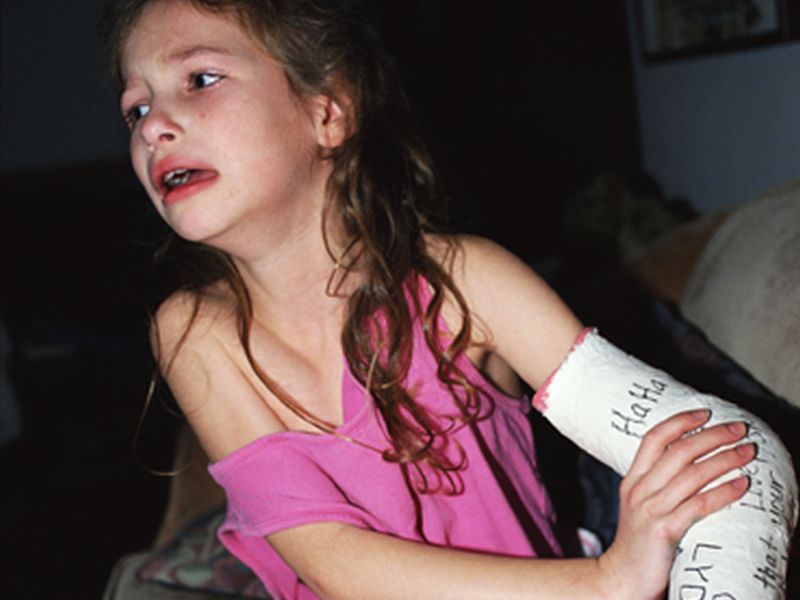
Studies and research indicate that exposure to media violence is a strong predictor of aggressive behavior. Research indicates that people learn their attitudes about violence at a very early age and exposure to violence desensitizes people to violence. Studies and research indicate that exposure to media violence is a strong predictor of aggressive behavior. An...
Tag: healthy kids
Dyslexia Symptoms, Signs, 6 Types, Tests, & Treatment
Dyslexia facts Primary dyslexia: This is the most common type of dyslexia, and is a dysfunction of, rather than damage to, the left side of the brain (cerebral cortex) and does not change with age. Dyslexia is a difficulty in learning to read. Dyslexia can be related to hereditary factors or other factors that affect...
Encopresis in Children: Definition, Causes, Treatment & Prognosis
Facts you should know about elimination disorders in children Most kids with encopresis also have constipation. Constipation is defined as "a group of disorders associated with persistent, difficult, infrequent, or seemingly incomplete defecation without evidence of a structural or biochemical explanation." Constipation is a relatively common event estimated to be responsible for 3%-5% of all...
Fifth Disease Treatment, Symptoms & Contagious Period
Fifth disease (parvovirus, erythema infectiosum) facts A virus causes fifth disease. Symptoms include low fever, fatigue, a "slapped cheeks" rash, joint pains, and a whole body rash. Doctors make a diagnosis of fifth disease based on clinical features. Rarely, fifth disease can become complicated. Fifth disease can cause miscarriage in pregnant women. What is fifth...
Do Babies Get Shots at Their 18-Month Checkup?
Babies may get a few shots at their 18-month checkup if they did not get them during their last checkup. Babies may get a few shots at their 18-month checkup if they did not get them during their last checkup. As recommended by the Centers for Disease Control and Prevention, your baby may receive one...
What Is the Difference Between Autism and Pervasive Developmental Disorder?
Pervasive developmental disorders (PDDs) are a set of behavioral disorders that are present since early childhood. Pervasive developmental disorders (PDDs) are a set of behavioral disorders that are present since early childhood. Although there is an overlap in the features of autism and PDDs, PDDs typically do not meet “all” the criteria for classical autism...
Childhood Obesity Prevention, Causes & Definition
An epidemic is defined as occurring when "new cases of a certain disease, in a given human population during a given time period, substantially exceed what is expected based upon recent experience." Pediatric obesity has reached epidemic proportions when compared with just 20 years ago. The goal of this article is to explore this phenomenon...
At What Age Do Late Talkers Talk?
Late talkers are toddlers (18 to 30 months old) who have a limited vocabulary for their age, but do not have any other developmental delays. Some late talkers may talk by three to five years of age. According to the American Speech-Language-Hearing Association (ASHA), late talkers are toddlers (18 to 30 months old) who have...
Child Abuse and Neglect: Signs, Risks, Treatment & Prevention
Child abuse facts Child abuse is when a caregiver either fails to provide appropriate care (neglect), purposefully inflicts harm, or harms a child while disciplining him or her. Child abuse is when a caregiver either fails to provide appropriate care (neglect), purposefully inflicts harm, or harms a child while disciplining him or her. Survivors of...
Autism Screening and Diagnosis: Get the Facts on the Test
Autism screening and diagnosis overview Diagnosing autism spectrum disorders (ASDs) can be difficult, since there is no medical test, like a blood test, to diagnose the disorders. Doctors look at the child’s behavior and development to make a diagnosis. ASDs can sometimes be detected at 18 months or younger. By age 2, a diagnosis by...